A creative strategy for a product is the plan that guides all marketing and communication efforts. It ensures your message is consistent and connects with your target audience. This strategy defines your product’s unique voice and how it will be presented to the world, aiming to build a strong brand identity and drive customer engagement.
What is a Creative Strategy?
Think of a creative strategy as a map for your product’s journey. It shows where you want to go and how you’ll get there. It’s the big idea behind your marketing.
It tells everyone what your product is about. It also explains why people should care. This strategy isn’t about random ads.
It’s about making smart choices that make sense together.
It helps you figure out your product’s main story. What makes it special? Who needs it the most?
How can you talk to them in a way they understand? A good strategy covers all these questions. It then uses these answers to build your brand’s image.
It makes sure your product feels real and memorable.
Why does it matter so much? In today’s busy world, many products look alike. A creative strategy cuts through the noise.
It gives your product a clear personality. This helps people connect with it. They start to trust it.
They might even love it.
It also guides your team. Everyone working on the product knows the main goal. They know the main message.
This makes their work more focused. It stops things from getting messy. Every ad, every social media post, every website word connects back to this core idea.
It’s like a secret handshake for your brand.
The goal is not just to sell more. It’s about building something lasting. It’s about creating a brand that people remember and choose again and again.
This strategy helps you do just that. It makes your product more than just a thing. It makes it an experience.
It makes it a part of people’s lives.
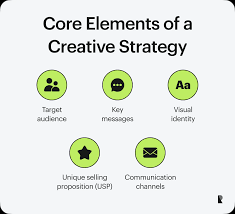
The Core Elements of a Creative Strategy
To build a strong creative strategy, you need a few key pieces. These pieces work together. They form the foundation of your plan.
Without them, your strategy might fall apart.
First, you need to know your target audience. Who are you trying to reach? What do they like?
What do they need? Where do they spend their time? Knowing this is super important.
It helps you speak their language. It helps you show them things they care about.
Next, define your unique selling proposition (USP). What makes your product different? What problem does it solve better than others?
This is your special superpower. You need to highlight it. Make it clear why you are the best choice.
Then comes the brand personality. How should your brand feel? Is it fun and playful?
Is it serious and trustworthy? Is it edgy and cool? This personality guides your tone of voice.
It guides your visuals. It makes your brand feel like a real person.
The key message is also vital. What is the one main thing you want people to remember? This is your product’s core idea.
It should be simple and powerful. It should be something that sticks in people’s minds.
Your visual identity is another big part. This includes your logo, colors, fonts, and images. These things make your brand look recognizable.
They also help convey your brand personality. Think about how your brand looks and feels visually.
Finally, you need to think about your channels. Where will you share your message? This could be social media, TV, websites, or even physical stores.
You need to choose places where your target audience will see you. You also need to make sure your message fits each channel.
These elements are not separate. They all connect. Your target audience helps shape your USP.
Your USP helps define your brand personality. Your brand personality guides your key message and visual identity. Your channels are where you deliver all of this.
It’s a big, connected system.
Target Audience Deep Dive
Who are they? Age, location, income, job.
What do they care about? Hobbies, values, struggles.
Where do they hang out online? Social media platforms, forums, websites.
What are their pain points? Problems your product can solve.
What are their dreams? Aspirations your product can help them reach.
Developing Your Product’s Creative Strategy
Creating a creative strategy might seem hard. But if you break it down, it’s manageable. It’s a process.
It takes time and thought. You don’t just guess. You research and plan.
Start by looking at your product itself. What does it do? What are its best features?
What are its weaknesses? Be honest. Knowing your product inside and out is the first step.
This is where your expertise comes into play.
Next, do your homework on the market. Who are your competitors? What are they doing?
How are they talking to people? You don’t want to copy them. But you need to know what you’re up against.
This helps you find your own unique spot.
Now, focus on your audience again. Talk to potential customers. Ask them questions.
What do they think about products like yours? What frustrates them? What do they wish existed?
This real-world feedback is gold. It helps you understand their needs better than anyone.
Based on all this, start to form your core ideas. What is the main benefit of your product? What is the emotional connection you want to build?
This is where the creative spark happens. You are translating facts into a compelling story.
Then, write down your key message. Keep it short. Make it memorable.
This message should guide everything you create. Think of it as your north star. Everything else orbits around it.
Develop your brand’s voice. How will it sound in writing? Will it be funny?
Serious? Helpful? Energetic?
This voice needs to match your product and your audience. If your product is for serious business people, a silly voice might not work.
Think about your visuals. What colors represent your brand? What kind of images will you use?
Do you need a logo? This visual identity must be consistent across all your marketing materials.
Finally, plan your execution. Which channels will you use? What kind of content will you create for each?
How often will you post? This is the practical part. It makes your strategy real.
Remember, a strategy isn’t set in stone forever. You need to check if it’s working. Look at the results.
See what people are saying. Be ready to make small changes. This keeps your strategy fresh and effective.
Quick Strategy Checklist
- Understand your product deeply.
- Know your competitors well.
- Research your target audience thoroughly.
- Define your unique selling points clearly.
- Craft a strong, memorable key message.
- Develop a consistent brand personality and voice.
- Plan your visual identity.
- Select the right communication channels.
- Outline your content plan.
- Set up ways to measure success.
Putting It Into Practice: Real-World Examples
Seeing how others do it makes it clearer. Let’s look at some products and how their creative strategies might work.
Consider a new type of coffee maker. It’s small, energy-efficient, and makes perfect espresso. Its target audience might be young professionals living in small apartments.
They care about quality, convenience, and sustainability.
The USP could be “Barista-quality espresso, perfectly brewed in your tiny kitchen.” The brand personality might be sleek, modern, and efficient. The key message: “Your morning ritual, perfected.” Visuals would be clean lines, metallic finishes, and images of people enjoying a quiet, perfect coffee moment before a busy day.
Channels might include Instagram with beautiful lifestyle shots. YouTube ads showing how easy it is to use. Partnerships with home decor bloggers.
Content could focus on “small space living tips” or “the perfect morning routine.”
Another example is a subscription box for healthy snacks. The target audience is busy parents who want to give their kids nutritious options but lack time. They value health, convenience, and variety.
The USP: “Healthy snacks your kids will actually love, delivered right to your door.” The brand personality could be fun, energetic, and trustworthy. The key message: “Happy kids, healthy snacks, easy mornings.” Visuals would feature colorful, happy kids and vibrant snack packaging.
Channels could be Facebook and Pinterest with recipes and snack ideas. Blog posts about child nutrition. Email newsletters with tips for picky eaters.
Influencer collaborations with parent bloggers. Content would highlight the ease of preparation and the health benefits.
What about a durable, eco-friendly backpack? Target audience: outdoor adventurers, students, and eco-conscious consumers. They value strength, sustainability, and ethical production.
The USP: “Built to last, kind to the planet.” The brand personality: Rugged, reliable, and responsible. The key message: “Adventure further, tread lighter.” Visuals would show the backpack in stunning natural landscapes and close-ups of its tough materials.
Channels: Outdoor lifestyle magazines, environmental blogs, adventure travel influencers. Content would focus on gear reviews, conservation efforts, and the story behind the sustainable materials. User-generated content showing the backpack on epic journeys would be powerful.
These examples show how the strategy tailors the message. It makes the product feel relevant. It connects with people’s lives.
It’s about understanding the human element behind the purchase.
Strategy in Action: Quick Look
Product: Smart Water Bottle
Audience: Health-conscious techies.
USP: “Tracks your hydration, syncs with your fitness app.”
Personality: Modern, innovative, health-focused.
Key Message: “Hydrate smarter, live healthier.”
Visuals: Clean, minimalist, blue and green tones.
Channels: Tech blogs, fitness apps, social media ads.
The Role of Experience in Creative Strategy
One thing I’ve learned over the years is that people connect with stories and experiences. A creative strategy needs to tap into this. It’s not just about listing features.
It’s about how those features make someone feel or what they enable them to do.
I remember working with a small company that made handcrafted leather goods. Their initial strategy was very product-focused. They listed the types of leather and the stitching techniques.
Sales were okay, but not great. They weren’t really selling the dream.
We dug deeper. We talked to their customers. Many of them weren’t just buying a wallet.
They were buying something that would last a lifetime. They were buying a piece of tradition. They were buying something that felt special and authentic in a world of fast-moving, disposable goods.
So, we shifted the strategy. Instead of just “Genuine Italian Leather,” we focused on the stories behind the leather. We talked about the artisans who made it.
We highlighted how the wallet would age and develop a unique patina over time. We used phrases like “A companion for your journey” or “Crafted for a lifetime.”
The visuals changed too. Instead of just product shots, we showed the wallets being used in real-life scenarios. A person pulling it out at a nice restaurant.
Someone using it on a weekend trip. The emotional connection became stronger.
This is where the “Experience” part of E-E-A-T comes in. It’s about showing that you understand the user’s life. You understand their aspirations.
Your product isn’t just an object; it’s a part of their story. This makes the strategy feel more human and more effective.
When developing your strategy, always ask: “What is the experience of using this product?” “What feeling does it create?” “How does it fit into someone’s life?” Answering these questions will lead to a much richer and more engaging creative strategy. It moves beyond just selling and into building a real connection.
Real-World Context and User Behavior
Understanding where and how people interact with products is key to a successful creative strategy. It’s not just about what the product is, but also about the context it lives in.
Think about a smart home device. Its strategy needs to consider the messy, busy environment of a family home. The ads might show a parent juggling groceries and kids, needing a quick voice command to turn on the lights.
The strategy must be practical and demonstrate ease of use in a chaotic setting. It needs to acknowledge that not everyone has a minimalist, perfectly organized living space.
Then there are user habits. For a fitness app, the strategy needs to acknowledge that people often start with good intentions but struggle with consistency. Instead of just showing perfect workouts, a good strategy might include messages of encouragement, tips for overcoming plateaus, or celebrating small wins.
It needs to adapt to real user behavior, not just ideal scenarios.
The design of the product itself also plays a role. If a product is designed for outdoor use, its creative strategy should emphasize durability, weather resistance, and portability. The visuals and language used should reflect the ruggedness and adventurous spirit associated with that activity.
A slick, indoor-focused campaign wouldn’t fit.
User behavior extends to how people make decisions. Some people are impulse buyers. Others research extensively.
A good creative strategy might have different touchpoints for different types of users. For impulse buyers, a clear, attention-grabbing offer might work. For researchers, detailed information and testimonials would be more effective.
Consider how a food product is marketed. The strategy will differ greatly if it’s a quick snack for on-the-go versus a gourmet ingredient for home cooking. The former might focus on speed and portability, while the latter would highlight taste, quality, and culinary experience.
The context of eating – alone at a desk, or with family at dinner – matters.
All these elements – environment, habits, design, and user behavior – inform the creative strategy. They help ensure that the message not only reaches the right people but also resonates with them in their actual lives. It’s about meeting people where they are, with a message that truly fits.
Contextual Strategy Elements
Environment: Home, office, outdoors, on-the-go.
User Habits: Daily routines, common challenges, decision-making styles.
Product Design: Features that align with usage context.
User Behavior: How people interact, buy, and use.
Cultural Nuances: How the product fits into societal norms and trends.
What This Means for You: When is it Normal?
So, how do you know if your creative strategy is hitting the mark? It’s normal for a strategy to evolve. What works today might need tweaking tomorrow.
The key is to observe and adapt.
It’s normal if your audience starts talking about your brand in a certain way. For instance, if your playful strategy leads to people sharing funny memes about your product, that’s a good sign. They’ve adopted your brand’s personality.
That’s a huge win.
It’s also normal for your key message to become part of the conversation. If people start using your slogan or the core idea in their own discussions about your product category, you’re on the right track. They understand what you stand for.
When you see consistent engagement on your chosen channels, that’s a positive signal. People are not just seeing your content; they are interacting with it. They are liking, commenting, and sharing.
This shows your creative approach is resonating.
However, it’s concerning if your strategy feels disconnected from your actual product or audience. If your marketing talks about excitement, but customers find your product boring or difficult to use, there’s a disconnect. This often points to a strategy that isn’t grounded in reality.
It’s also a red flag if your competitors are consistently outperforming you in areas your strategy is meant to address. If your “unique” message is being drowned out or ignored, your strategy might not be sharp enough. Or perhaps your channels are wrong.
A simple check is to ask yourself: “Does this marketing piece feel like it comes from the same brand as our product?” If the answer is hesitant, you might have a problem. Consistency is crucial for building trust.
Another check is to look at customer feedback. Are people understanding your message? Are they responding positively to your brand’s tone?
If you’re getting confused replies or negative comments related to your messaging, it’s time for a review. Your strategy needs to be clear and welcoming.
Quick Tips for a Stronger Strategy
Here are some straightforward tips to help boost your product’s creative strategy. These are practical steps you can take.
Keep it simple. Complicated ideas get lost. Use plain language. Focus on one big idea at a time.
Don’t try to say too much. People can only remember so much.
Be consistent. Use the same logo, colors, and tone everywhere. This builds recognition. It makes your brand feel solid and reliable.
If your look changes every week, people won’t know who you are.
Know your audience inside out. I can’t stress this enough. Talk to them. Listen to them.
Understand their world. Your strategy should speak directly to their needs and desires.
Focus on benefits, not just features. Instead of saying “It has a 10-megapixel camera,” say “Capture crystal-clear memories of your family.” How does it make life better? That’s the key.
Tell a story. People connect with narratives. What’s the story behind your brand? What problem did you set out to solve?
Stories make your brand relatable and memorable.
Don’t be afraid to be different. If everyone else is shouting, maybe you can whisper effectively. Find your own unique voice. Stand out by being authentic, not just loud.
Test and measure. See what’s working and what’s not. Use data to guide your decisions. What ads get the most clicks?
What posts get the most shares? Adjust your strategy based on what you learn.
Get feedback. Ask customers, colleagues, or even friends for their honest opinions. A fresh perspective can reveal blind spots you might have missed. They might see something you don’t.
Stay true to your brand. While adapting is good, don’t lose your core identity. Your strategy should be a living thing, but it should always feel like it belongs to your brand.
Strategy Boosters
Simplicity: One core idea per message.
Consistency: Unified look and voice.
Audience Focus: Speak their language.
Benefit-Driven: Show how life improves.
Storytelling: Create emotional connections.
Uniqueness: Find your distinct voice.
Data-Informed: Track results, adjust.
Feedback Loop: Ask for opinions.
Frequently Asked Questions
What is the most important part of a creative strategy?
The most important part is understanding your target audience. If you don’t know who you’re talking to, your message won’t land. Knowing their needs, desires, and how they think is vital for any strategy to succeed.
How long does it take to develop a creative strategy?
Developing a solid creative strategy can take weeks to months. It involves research, analysis, brainstorming, and refinement. For a new product, it’s an investment of time upfront.
For existing products, regular reviews and updates are needed.
Can a small business create an effective creative strategy?
Absolutely! Small businesses can be very effective with creative strategies. Often, they can be more agile and closer to their customers.
The key is focus and authenticity, rather than a huge budget. Start by understanding your niche audience deeply.
What if my product is very technical? How does that affect strategy?
Even technical products need a strong creative strategy. The trick is to translate technical features into tangible benefits for the user. Focus on how the technology solves a problem or improves a process.
Use visuals and language that resonate with your specific audience, whether they are experts or everyday users.
How do I measure if my creative strategy is working?
Measure through key performance indicators (KPIs). These can include brand awareness (mentions, searches), engagement rates (likes, shares, comments), website traffic, lead generation, and ultimately, sales. Customer feedback and sentiment analysis are also crucial metrics.
Should my creative strategy change if my product evolves?
Yes, it should. As your product grows or changes, your creative strategy needs to adapt. If you add new features, target a slightly different audience, or enter a new market, your strategy should reflect that evolution.
Regular review ensures your strategy stays relevant.
Conclusion
A creative strategy is your product’s roadmap to connect with the world. It’s about clear thinking, deep audience understanding, and consistent messaging. By focusing on your audience, defining your unique value, and telling a compelling story, you build a brand that resonates.
It’s an ongoing journey, but one that brings lasting rewards.