Understanding Ad Styles and Your Product’s Needs
Think of advertising like choosing an outfit. You wouldn’t wear a swimsuit to a formal dinner. The same idea applies to marketing.
Different products need different ways of being shown. It’s all about showing your product in the best light. It’s about speaking to the people who need it most.
Some products are easy to show. You can just take a nice picture. Others are harder.
Maybe it’s a service. Maybe it’s something complex. Or maybe it’s something people don’t even know they need yet.
We need to look at what makes your product special. What problem does it solve? Who wants it?
How does it make someone feel? Answering these questions helps us pick the right ad style.
My Own Ad Style Adventure
I remember when I first started. I had this amazing new type of reusable food wrap. It was eco-friendly and worked great.
My first ads were just pictures of the wrap. They looked nice, but they didn’t do much. People just scrolled past.
I felt a bit lost. Why wasn’t it working?
Then I watched a friend. She used a similar product. She made a short video.
In the video, she showed herself using the wrap. She packed a sandwich for her kid’s lunch. She covered a bowl of leftovers.
It was simple. But it showed the wrap in action. It showed how easy it was.
It showed how it helped her avoid plastic wrap. That’s when it clicked for me. I needed to show people how it worked and why they needed it.
I started making short videos too. I showed the wraps keeping fruits fresh. I showed them sealing bowls.
Sales went up! It was a lesson in showing, not just telling.
Matching Products to Ad Styles
Let’s dive into different product types and the ad styles that shine for them.
Visual Products: The Power of a Picture
Products that look good: Think fashion, home decor, food items, cars, art, beauty products.
Best Ad Styles:
- High-Quality Photography Ads: Clean, crisp images that highlight the product’s beauty and details.
- Lifestyle Photography Ads: Show the product being used in a desirable setting or by aspirational people.
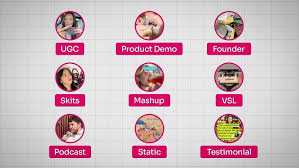
- Short, Engaging Videos: Quick clips showing the product in use, its features, or a “wow” moment. Think 15-30 seconds.
- Carousel Ads: Great for showing multiple angles, color options, or steps of use in a single ad.
Why it works: These products are naturally appealing to the eyes. A strong visual can grab attention instantly and make someone desire the item. The goal is to make them think, “I want that!”
Problem/Solution Products: Showing the Fix
Products that solve a specific pain point: Cleaning supplies, organizational tools, health aids, software that simplifies tasks, security systems.
Best Ad Styles:
- Demonstration Videos: Show the problem, then show your product solving it. This is key.
- Before & After Ads: Powerful for visible results (e.g., a stain remover).
- Testimonial Ads: Real people sharing how the product helped them. Builds trust.
- How-To Guides (short form): Quick explanations of how the product makes life easier.
Why it works: People look for solutions. If you can show them you have the answer to their problem, they pay attention. Seeing is believing when it comes to solutions.
Service-Based Products: Building Trust and Value
What you offer: Consulting, coaching, repair services, financial planning, creative agencies, online courses.
Best Ad Styles:
- Expert Interviews/Q&A Videos: Show your knowledge and approach.
- Case Study Ads: Highlight successful projects and client results.
- Animated Explainer Videos: Simplify complex services into easy-to-understand visuals.
- Testimonial Videos/Quotes: Let happy clients speak for you.
- Informational Blog Posts/Articles (promoted): Educate potential clients about their needs and how you can help.
Why it works: Services are less tangible. Ads need to build confidence. Showing expertise, success, and genuine care is vital.
People buy from people they trust.
High-Consideration Products: Deep Dives
Products requiring research: Cars, homes, complex software, luxury goods, financial investments.
Best Ad Styles:
- Longer-Form Videos (webinars, detailed reviews): Provide in-depth information.
- Detailed Blog Posts & Guides: Answer all potential questions thoroughly.
- Interactive Tools (calculators, configurators): Let users explore options.
- Webinars and Live Demos: Offer direct interaction and expert guidance.
- Data-Driven Ads: Show statistics, performance metrics, and solid facts.
Why it works: When people spend a lot or make a big decision, they want all the facts. Ads need to be informative and reassuring. They need to provide comprehensive details to help with their decision-making process.
Impulse Buy Products: Instant Appeal
Products with low price points and immediate desire: Gadgets, novelty items, trendy accessories, impulse snacks, small toys.
Best Ad Styles:
- Short, Catchy Video Ads (under 15 seconds): Focus on fun, novelty, or a single compelling benefit.
- Visually Striking Static Images: Bright, bold, and attention-grabbing.
- GIFs: Looping, animated visuals that are fun and shareable.
- Limited-Time Offer Ads: Create urgency.
Why it works: These products don’t need much convincing. The goal is to catch someone’s eye, spark a moment of desire, and make it easy to click and buy. Speed and impact are key.
The Role of Your Target Audience
Who are you trying to reach? This is super important. What works for teens might not work for seniors.
What works for busy parents might not work for college students.
Think about:
- Their Age: Younger people often respond well to video and social media trends. Older audiences might prefer clearer, more direct messages or email.
- Their Interests: What else do they like? Where do they spend their time online?
- Their Habits: Are they always on their phones? Do they read long articles? Do they watch videos while commuting?
- Their Values: Do they care about eco-friendliness, saving money, convenience, or luxury?
For example, if you sell eco-friendly cleaning supplies and your audience is environmentally conscious young families, you’ll want ads that highlight sustainability and safety. Short, friendly videos showing the product cleaning up kid messes safely would be great.
If you sell high-end watches, your audience might be successful professionals. They’d likely respond to ads that showcase craftsmanship, luxury, and status. Sophisticated imagery and perhaps a short documentary-style video about the watch’s creation would fit well.
Ad Platforms and Their Strengths
Where you show your ads matters just as much as the style.
Social Media (Facebook, Instagram, TikTok, Pinterest)
Good for: Visual products, impulse buys, lifestyle products, services targeting specific demographics.
Strengths: Highly visual, great for video, powerful targeting options based on interests and behavior.
Ad Styles that Shine: Short videos, eye-catching images, carousel ads, Stories ads, user-generated content style ads.
Search Engines (Google Ads)
Good for: Problem/solution products, high-consideration products, services, anything people actively search for.
Strengths: Reaches people with active intent. You show ads when someone is already looking for what you offer.
Ad Styles that Shine: Text ads (clear, concise benefits), Shopping ads (for physical products with images and prices), responsive display ads.
YouTube
Good for: Almost anything, especially products that need explanation or demonstration, lifestyle brands, services.
Strengths: Massive audience, powerful for storytelling and in-depth demonstrations, strong engagement.
Ad Styles that Shine: Skippable in-stream ads (need to grab attention fast!), non-skippable ads, bumper ads (6 seconds, for quick brand recall), documentary-style ads.
Email Marketing
Good for: Nurturing leads, promoting sales to existing customers, high-consideration products, services.
Strengths: Direct communication with interested individuals, high return on investment, great for building relationships.
Ad Styles that Shine: Personalized newsletters, promotional emails with clear calls to action, segmented campaigns.
Crafting Your Message: What to Say
Beyond the style, the words and visuals you choose are crucial.
Focus on Benefits, Not Just Features
Features: What your product is or does. (e.g., “This blender has a 1200-watt motor.”)
Benefits: What your product does for the customer. (e.g., “Blend frozen fruit into smooth smoothies in seconds, saving you time in the morning.”)
People buy outcomes. They buy how it makes their life better, easier, or more enjoyable. Always translate features into benefits.
Use Clear, Simple Language
Avoid jargon or technical terms that your audience might not understand. Imagine you are explaining it to a friend. Use short words and short sentences.
This helps everyone understand quickly.
Instead of “optimize your workflow,” say “make your work faster.”
Instead of “enhance user engagement,” say “help people connect more.”
Include a Strong Call to Action (CTA)
What do you want people to do after seeing your ad? Be clear. Use action words.
Examples:
- Shop Now
- Learn More
- Sign Up Today
- Get Your Free Trial
- Download Our Guide
- Book Your Appointment
Make sure your CTA matches the ad’s goal. If it’s a quick impulse buy, “Shop Now” is great. If it’s a service that needs explanation, “Learn More” or “Book a Consultation” works better.
The Importance of Testing and Iteration
What if you’re still not sure? That’s okay. The best way to find out what works is to test.
A/B Testing
This means creating two versions of an ad and showing them to similar groups of people. You then see which one performs better.
You could test:
- Different headlines
- Different images or video clips
- Different calls to action
- Different ad copy (the text of the ad)
Even small changes can make a big difference. For example, testing a bright red “Buy Now” button against a subtle blue one might show you which color drives more clicks.
Track Your Results
Use the analytics tools provided by ad platforms. Look at:
- Click-Through Rate (CTR): How many people click your ad after seeing it.
- Conversion Rate: How many people take the desired action (buy, sign up, etc.) after clicking.
- Cost Per Acquisition (CPA): How much it costs to get one customer.
- Return on Ad Spend (ROAS): How much money you make for every dollar spent on ads.
These numbers tell you what’s working and what’s not. They guide your future ad decisions.
When to Seek Expert Help
Sometimes, it’s smart to bring in someone who does this every day. Ad agencies or freelance marketing experts have seen it all. They can offer insights you might miss.
Consider expert help if:
- You’re launching a complex product or service.
- You have a large ad budget and want to maximize its impact.
- You’ve tried different ad styles and aren’t seeing the results you want.
- You’re a small business owner wearing too many hats.
An expert can help you define your audience, choose the right platforms, craft compelling messages, and set up your campaigns for success. They bring experience and can save you time and money in the long run.
Common Mistakes to Avoid
Even with the best intentions, some common pitfalls can trip you up.
Mistake 1: Using the Same Ad for Everything
As we’ve discussed, this is rarely effective. A product that sells itself on looks needs different treatment than a complex service. Tailor your ads to the product type and audience.
Mistake 2: Not Knowing Your Audience
You can’t hit a target you can’t see. If your ads aren’t resonating, it’s often because they aren’t speaking the right language to the right people. Do your research!
Mistake 3: Overly Complicated Messaging
Ads need to be understood quickly. If your message is too long, too technical, or too vague, people will move on. Keep it simple, clear, and benefit-driven.
Mistake 4: No Clear Call to Action
What should someone do next? If you don’t tell them, they won’t know. Always include a clear instruction.
Mistake 5: Not Tracking Results
Advertising without tracking is like driving blindfolded. You have no idea if you’re going the right way. Use data to refine your strategy and improve your campaigns.
The Big Your Brand’s Story
Remember that your ads are a part of your brand. They should feel consistent with your overall message and values. Even though you might use different styles for different products or campaigns, there should be an underlying brand voice and identity that shines through.
A cohesive brand story helps build trust. It helps people remember you. It makes them feel connected to what you offer, beyond just the product itself.
Putting It All Together
Finding the right ad style for your product is a journey. It involves understanding your product’s unique strengths, knowing who you’re talking to, and choosing the right places to tell your story.
Start by asking:
- What makes my product special?
- Who needs this product?
- What problem does it solve or what joy does it bring?
- Where does my ideal customer spend their time online?
Then, match that with ad styles that highlight those points effectively. Visual products need strong visuals. Services need to build trust.
Complex items need detailed explanations. Impulse buys need instant appeal.
Don’t be afraid to experiment. Test different approaches. Watch the data.
Learn what resonates with your audience. The goal is to connect your product with the people who will love it, and the right ad style is the bridge that gets you there.
Frequently Asked Questions
What is the most effective ad style for impulse buy items?
For impulse buys, the most effective ad styles are usually short, highly visual, and create a sense of immediate desire or fun. Think eye-catching GIFs, very short video clips (under 15 seconds) that highlight a novelty or quick benefit, and bold, bright static images. Limited-time offers can also work well to encourage quick decision-making.
How do I know if my ad’s message is too complicated?
Your ad message is too complicated if it uses jargon, technical terms your audience might not know, or if it takes more than a few seconds to grasp the main point. Try reading it aloud to a friend or someone who isn’t familiar with your product. If they look confused or ask clarifying questions, simplify it.
Focus on one key benefit per ad.
Can I use the same ad style across different social media platforms?
While you can adapt an ad style, it’s best to tailor it to each platform. For example, a polished video that works on YouTube might need to be shorter and more dynamic for TikTok or Instagram Reels. Similarly, a Pinterest ad might focus more on lifestyle and aesthetic, while a Facebook ad could be more direct or community-focused.
Understanding each platform’s audience and best practices is key.
What’s the difference between features and benefits in ad copy?
A feature is a characteristic of your product or service (e.g., “Our software has cloud storage”). A benefit is what that feature does for the customer (e.g., “Access your files from anywhere, on any device, so you’re never tied to your desk”). People buy benefits because they solve problems or improve their lives.
Your ads should always translate features into compelling benefits.
When should I consider using animated explainer videos for my product?
Animated explainer videos are fantastic for services or complex products that are hard to visualize or explain quickly. They are great for breaking down abstract concepts, demonstrating processes, or showcasing how a service works in an engaging and easy-to-understand way. If your product involves multiple steps or requires explaining “why” it’s important, animation can be a strong choice.
How can I make my ad copy more relatable?
To make your ad copy relatable, use everyday language, speak directly to your audience’s pain points or desires, and use “you” and “your” more than “we” or “our.” Share short stories or scenarios that your audience can see themselves in. Acknowledging a common struggle before offering your solution can also make it feel more personal and understanding.
Conclusion
Choosing the right ad style is about connecting your product’s story with your audience’s needs. It’s a mix of art and science. By understanding your product, your audience, and the strengths of different ad formats, you can create ads that truly shine and drive results.